Work
What I have built.
Five chapters, then the year month by month.
about 110 seconds, with sound or scroll at your own pace


AI that reads handwriting 4,678 papers scored
AI that teaches a solution video that writes itself
ERP 16 modules, more than 50 screens
Financial statements 284 companies, every figure cited
Google Ads a lead from about $157 to $60–96
Search a barber's site, first in its town
Websites a free site in 40 languages, live in two days
Mobile apps four live in the App Store
Games a 3D island that runs in a browser
3D a coastline built from real elevation data
Yours.
AI systems
I taught software to read handwriting.
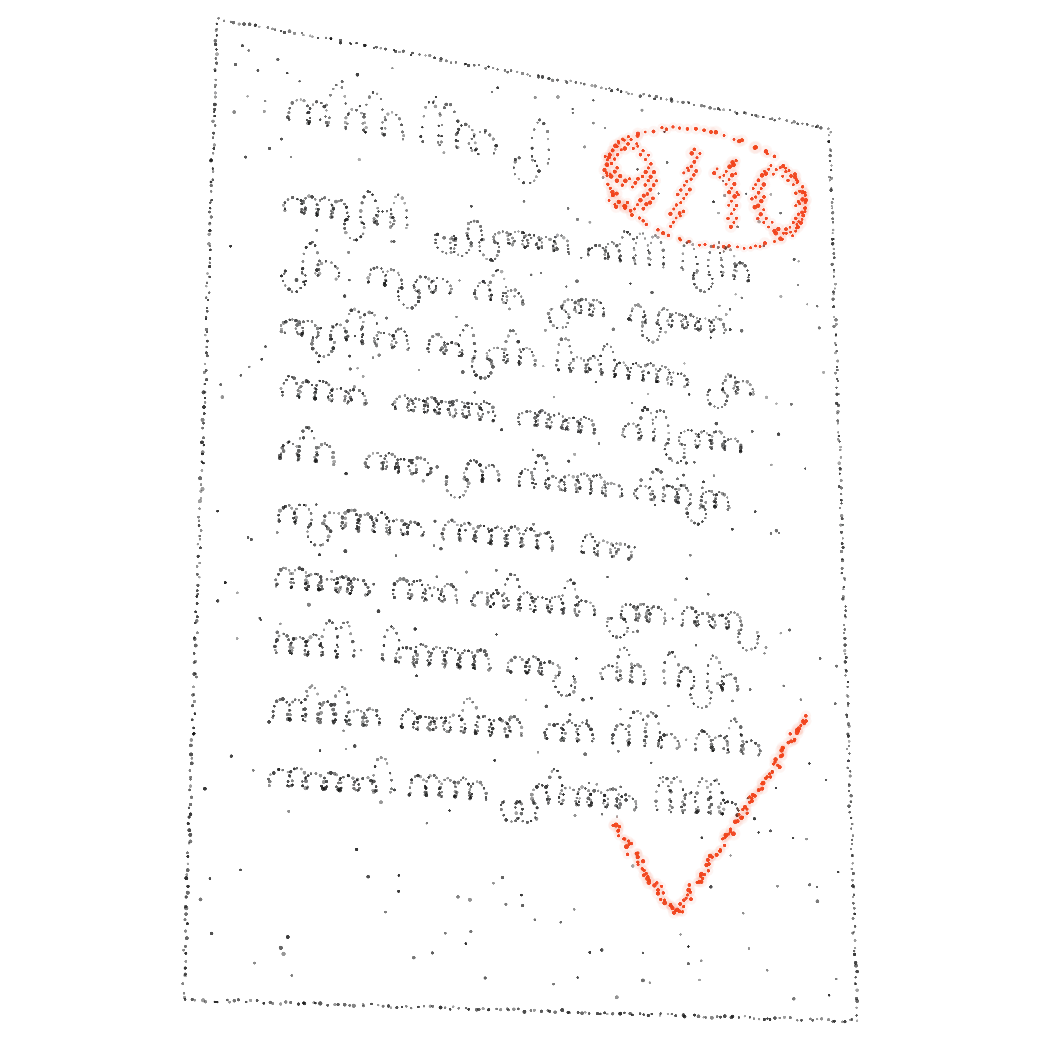
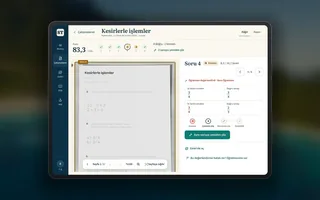
At a private school in Istanbul, middle-school students photograph their paper homework and send it in. The AI system I built reads the handwriting and scores every question against the teacher's answer key.
A paper, done by hand
Homework stays on paper.
A photo
The student photographs each page with a phone or a tablet and sends it.

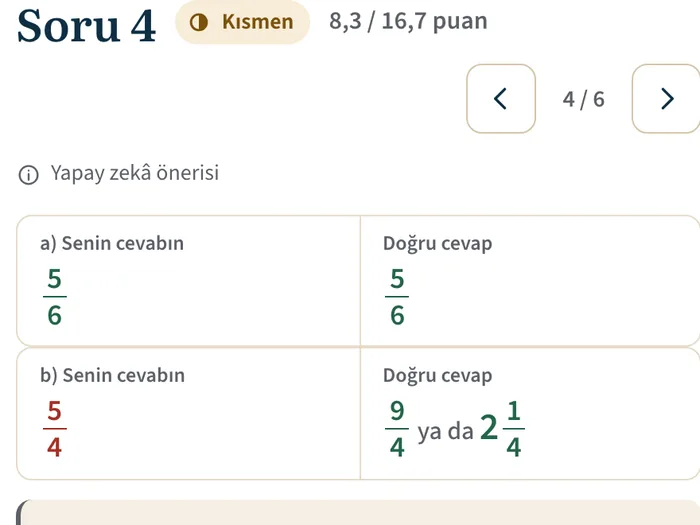
Every question, scored
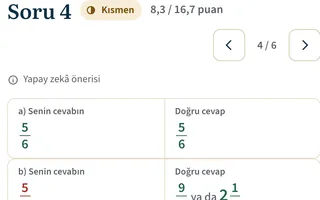
A few minutes later every question, and every part of a question, has its own result: right, partly right or wrong, with the reason.

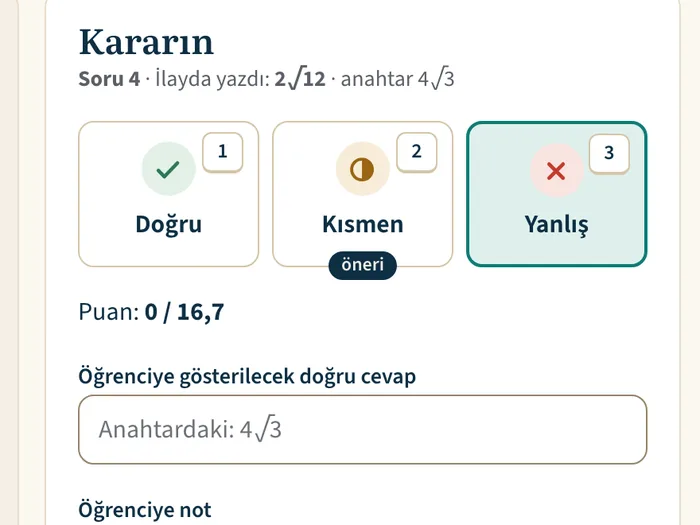
The teacher decides
The teacher can change any score.

The mistake becomes a lesson
Each mistake goes into the student's own mistake notebook, with a new question of the same kind to solve by hand on the screen, and a solution video that writes the answer out step by step.


These screens are the same product with invented students; the AI results on them are real. The school's own data is never shown.
One private school in Istanbul, grades 5 to 8, September 1 to November 9, 2026. Counted from the system's own records; no name was read. How the papers were counted
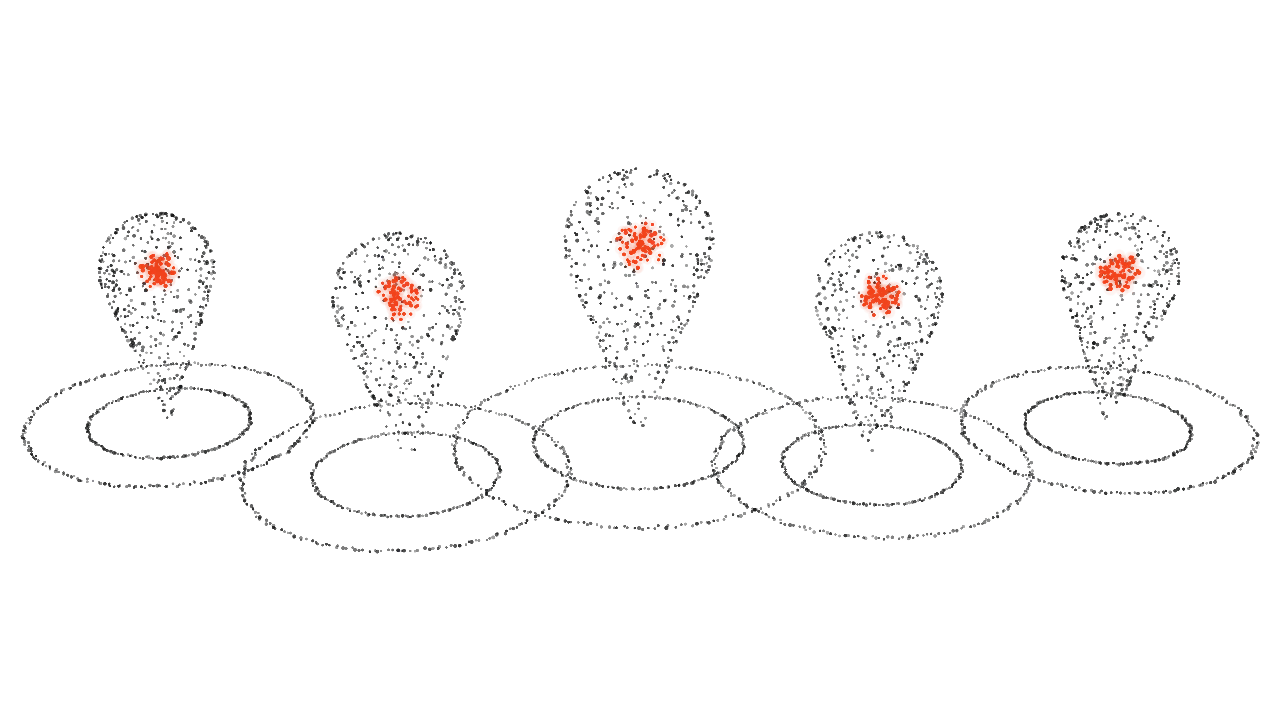
There are 4,678 points moving on this page: one for each of those papers.

When it is not sure
In the version I prepared for other schools, an answer the system is unsure of waits for the teacher's decision, and a photo it cannot read goes back to the student with the reason in one sentence.


The question cutter
A Mac app I built cuts a scanned question book into single questions, each named by its printed number. On a 238-page book it had never seen, 222 pages needed no correction.
The reader of exam answer sheets
Teachers photograph answer sheets with a phone. A vision model I fine-tuned reads which option each student marked. A mark it is unsure of is read a second time, and if it is still unsure it goes to a teacher instead of being guessed. In use since May 2025.
And a version any school can install.
okulyazilimevi.com is the same system prepared for other schools. The product, its site and its films are my work. It is looking for its first pilot schools, and I show it on a 20-minute video call.

The same idea, at the stock exchange.


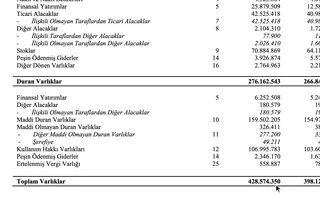
A figure on BİM's record for the first half of 2026, and the page of the company's own financial statements that it was read from.
A record you can open now: BİM, first half of 2026.
1.6% interest-bearing loans, of total assets (threshold 33%)
7.7% interest-bearing assets, of total assets (threshold 33%)
1.3% excluded (non-compliant) income, of total income (threshold 5%)
I founded and built Sağlama. It reads listed companies' own financial statements, works out the three ratios Islamic finance sets limits for, and links every figure to the page it came from: 284 companies so far.
Where a statement does not say enough, Sağlama publishes a range instead of a guess. Nothing is estimated.
Sağlama measures. Each institution's own committee decides.
Your business has its own version of this: forms, invoices, reports, anything your people read one page at a time. I build the system that reads it.
ERP and business systems
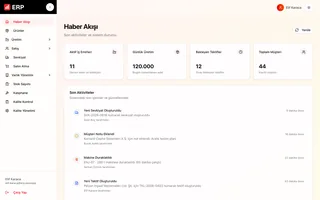
A factory runs on the ERP I built.
Sixteen modules and more than fifty screens take a manufacturer in Istanbul from the first quote to the shipment: sales, production planning by machine and shift, the mould shop, quality, purchasing, stock counts.
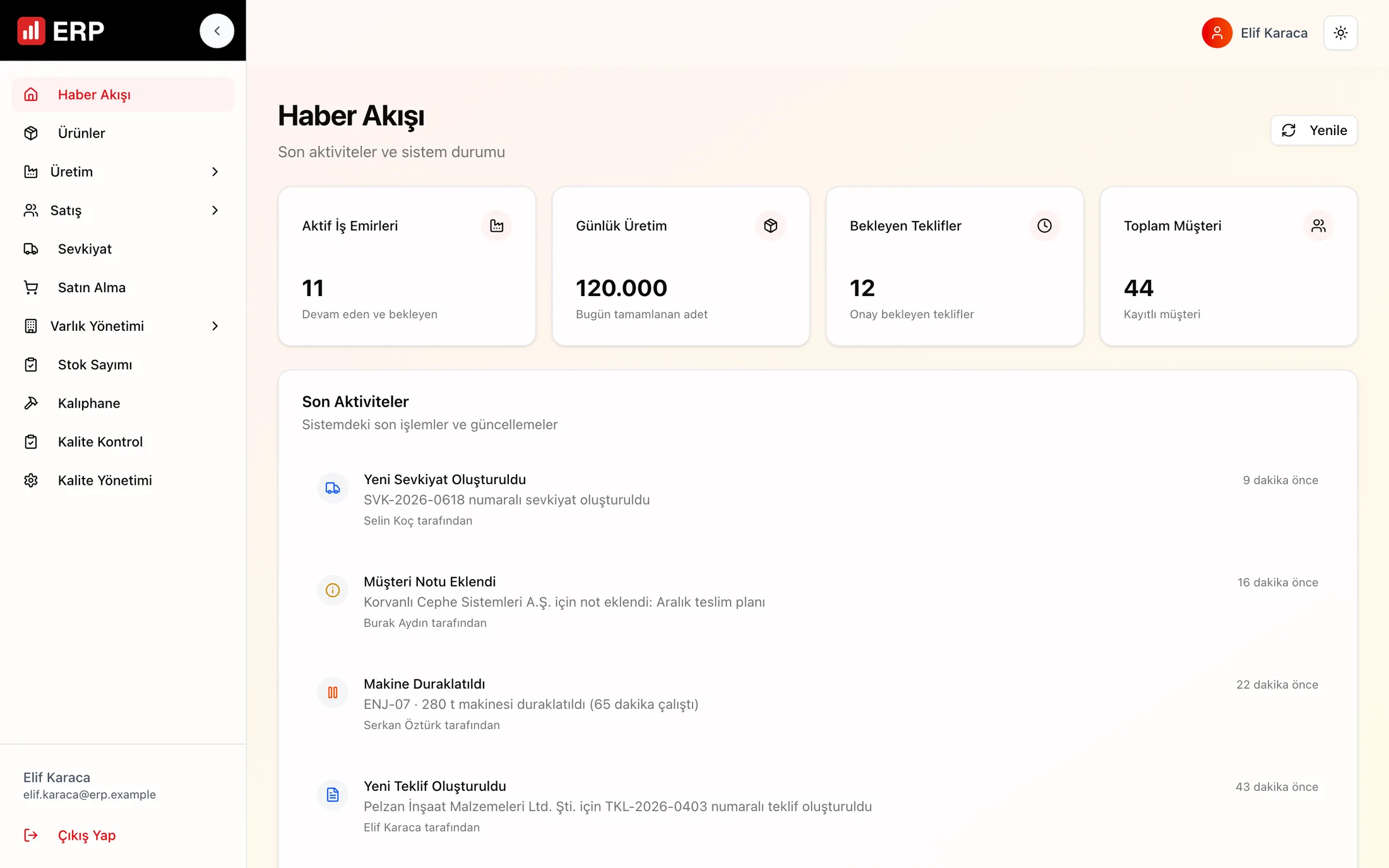
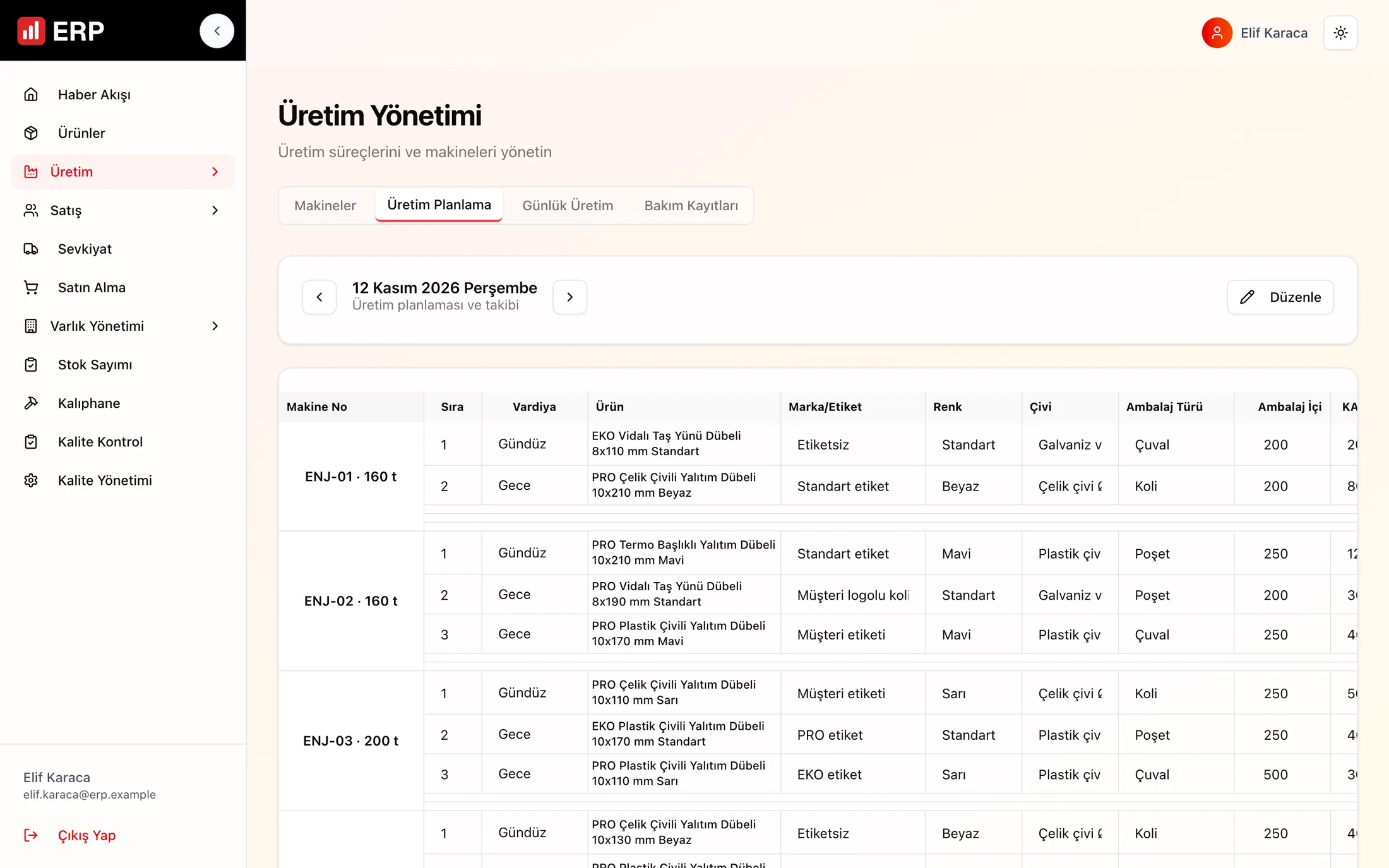
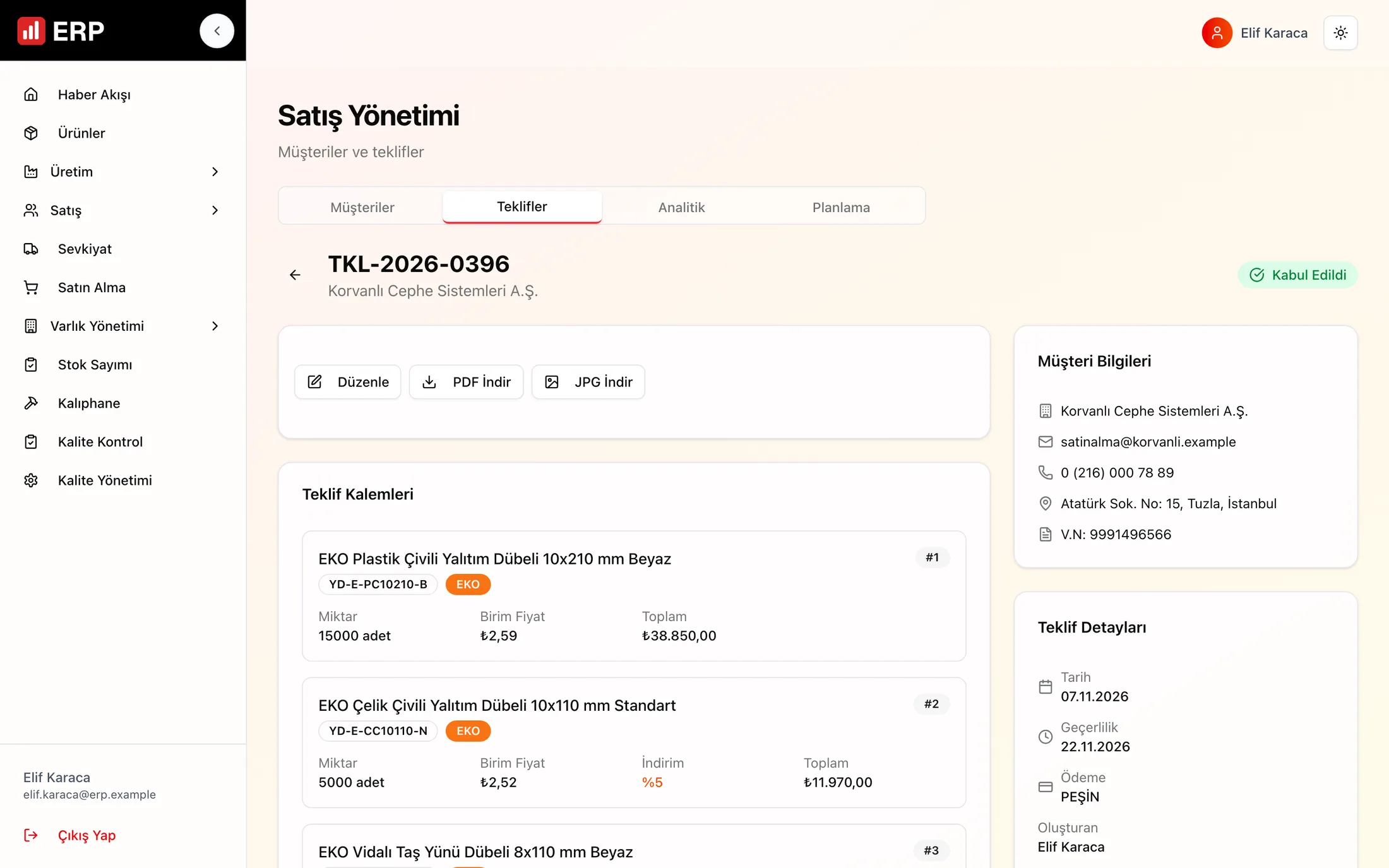
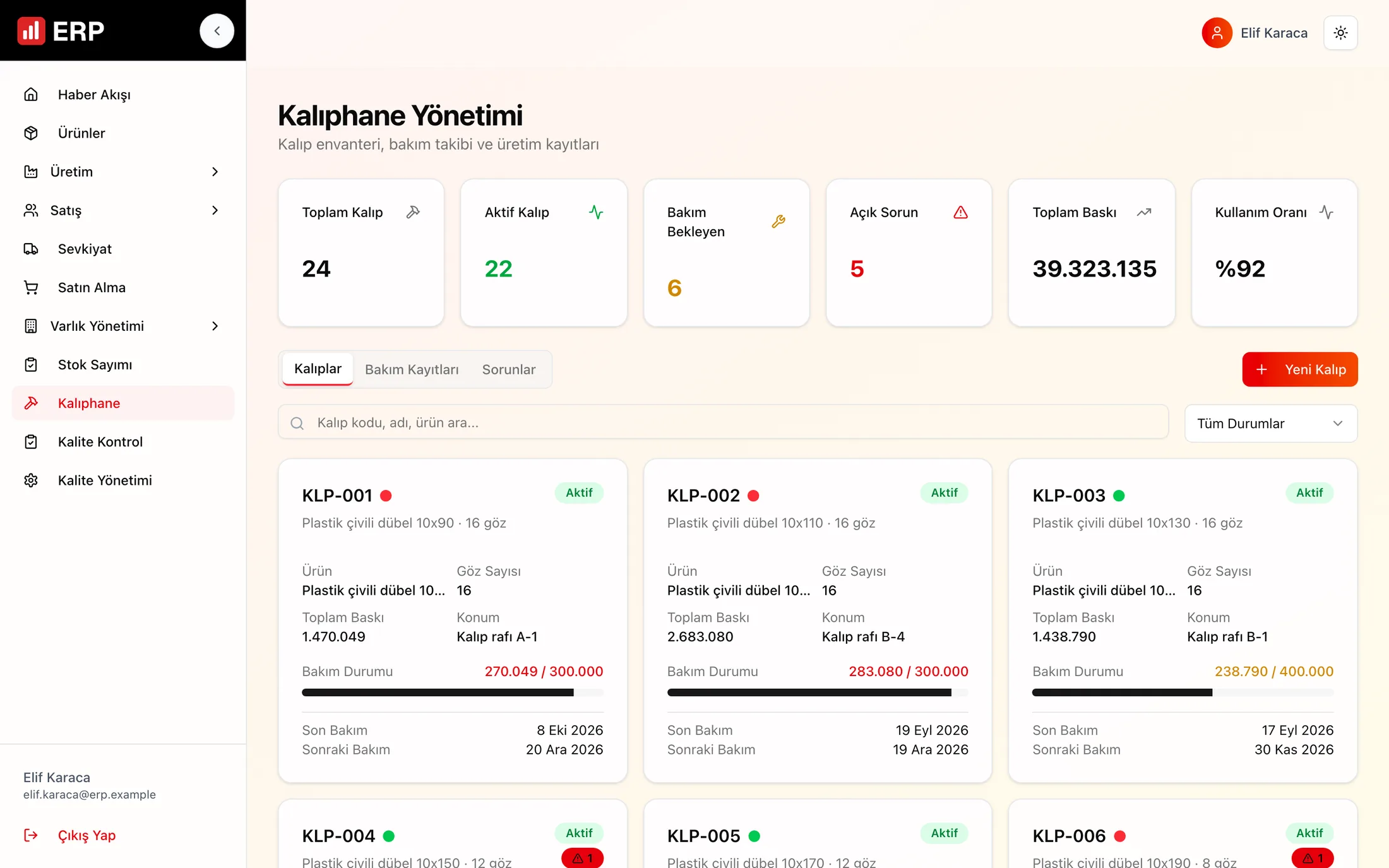
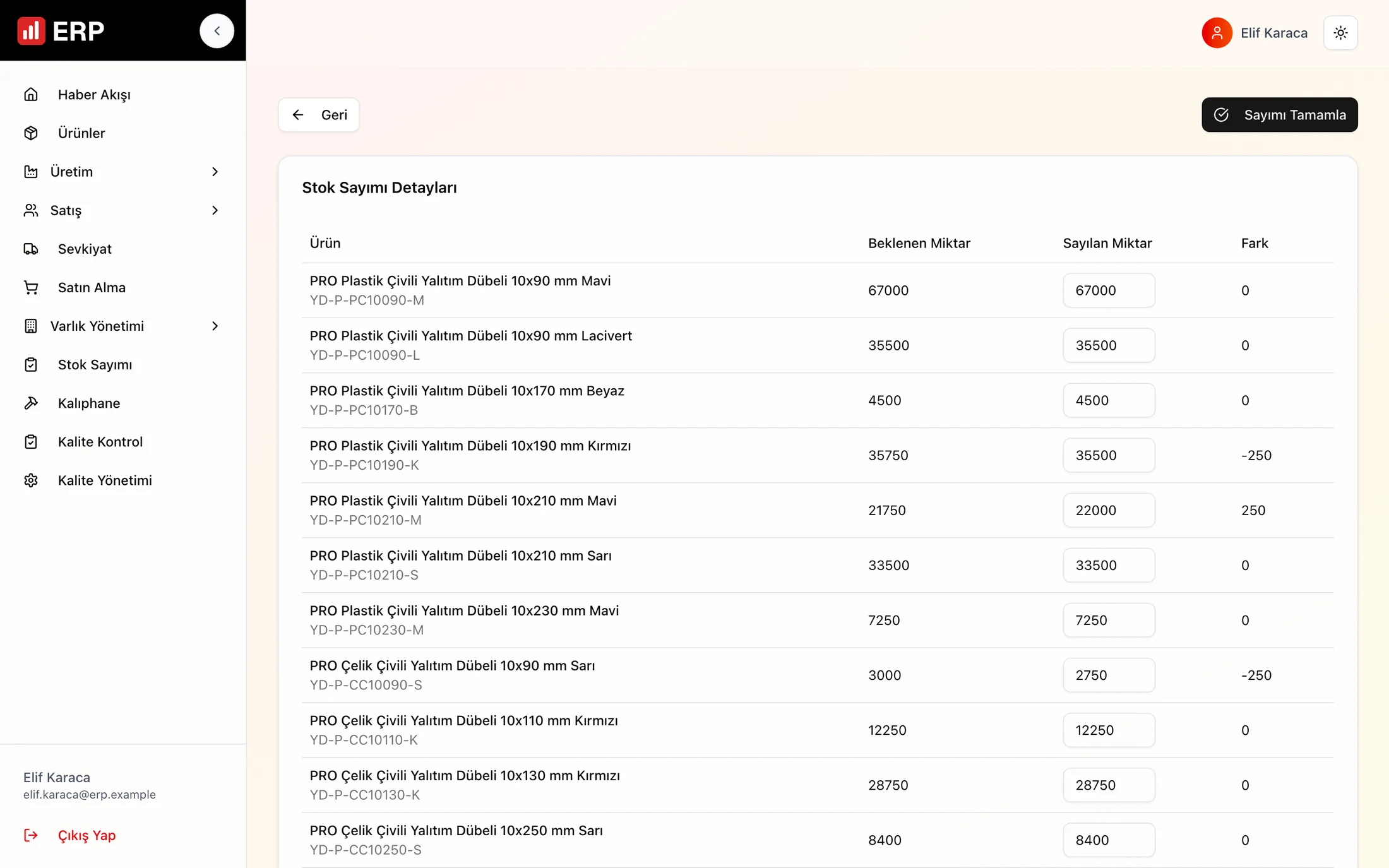
The ERP's own interface, shown with invented sample data. These are not captures of the client's system.
It is tied into the company's accounting system: customer, supplier and stock cards come in from there, and an accepted quote goes back as a sales order by itself.
I built it and ran it from May 2025. In September 2026 I handed the code, the database and the hosting over to the client, with no downtime.
For a school: its weekly timetable. Every change is checked against the rules, and each teacher's own timetable goes out by e-mail as a PDF. In use since August 2026.
Tell me how your business runs today: the spreadsheets, the phone calls, the paper. I'll tell you what I would build first.
Websites, search and Google Ads
People search. I build what they find.
The ad that brought them, the page they landed on, the result that showed you: I build all three, and I count what each one brings back.
$510,000 of Google Ads spend managed since 2023. My own code runs the accounts.
- 157 May
- 67 Jun
- 96 Jul
- 62 Aug
- 63 Sep
- 87 Oct
- 60 Nov
Ad cost per tracked lead, in dollars, for a tree-service company in the United States, 2026. November is the 1st to the 9th.
Since 2023 I have managed about $510,000 of Google Ads spend. My own code runs the accounts through the Google Ads API: it builds and updates the campaigns, down to a separate campaign for every town a client serves.
For a tree-service company in the United States, a lead cost about $157 in the first month after I rebuilt the account, and $60 to $96 in every month since.
A lead here is a tracked call, a tap on the phone number or a click on the form button. I count those, not finished jobs.
For a plastic-surgery clinic I built ten landing pages in five languages for patients from abroad, with every WhatsApp message tied back to the ad that brought it.
5,209 times Google showed saglama.com in the 28 days to November 9, 2026
201 in the 28 days before
Search, and now AI assistants.
People have begun to ask AI assistants what they used to type into a search box. In September 2026 I set that plastic-surgery clinic's pages up for ads inside ChatGPT, with every lead traced back to its source: a tap on WhatsApp, a tap on the phone number, a sent form.
Search itself I run as a measured programme across ten sites: every change is logged with its way back, and Google's own figures are read every week. One result: a barber's one-page site I built is first on Google when people search for a barber in its town.
My own sites carry a plain file written for AI assistants, and for clinics I built a scanner that lists what on a website breaks Türkiye's health-advertising rules.
Seven client sites, each live on the client's own domain.
Among them a manufacturer's product catalogue, a tiny-house builder that sells to the UK and the EU, and a real-estate consultant on the Turkish coast. A barber's shop has its site in four languages, with its scissors turning in 3D.
Takhrij is a free website in 40 languages. Paste a saying that reached you as “the Prophet ﷺ said…”, and it shows where that saying is written. It went live two days after I decided to build it.


A barber's shop
A free site in 40 languages
A real-estate consultant
Tell me what you sell, and where. I'll tell you what I would do first.
Mobile apps and games
From an idea to the App Store, four times.
I take an app from an idea to the stores and keep it running after launch: design, code, store review, release, updates. All four are in the App Store, and one is on Google Play as well.









The first came out on March 7, 2026. Zoomi Kids went from its first line of code to the App Store in one week.
And an island you can sail to.
Gelgit Adası is a 3D island that runs in the browser on an iPad. On an open-source game engine I built the island itself: a lighthouse, an amphitheatre, a reef with a whale, a boat to sail around it. The boat's fuel is homework: a question done right the first time adds a litre.
Its first release was on September 26, 2026. At the school it runs in demo mode.

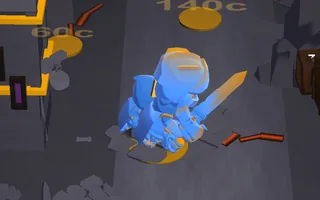
In-game footage.


A multiplayer action game for phones went from nothing to builds on three platforms in four days of July 2026. It is a prototype.
Need an app, or a game? Tell me what it should do.
3D and film
Show the land before anyone visits it.
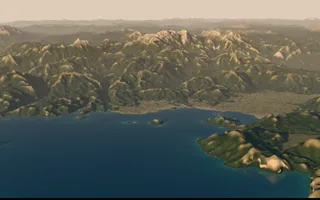
For a real-estate consultant on the Turkish coast I built the terrain from real elevation data and rendered it: a flight over the regions that turns as the visitor scrolls, and a parcel standing out on its hillside.

Rendered from real elevation data.

I also built a generator that turns a land-registry parcel file into a 29-second flight over photorealistic terrain, with the parcel outlined and its area written on it.
I make the films too.
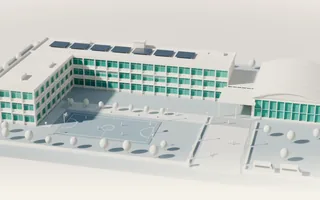
Five product films, sixteen films of the island's parts, finance films in Turkish, English and Arabic. When something I build needs to be shown, I make the film as well.


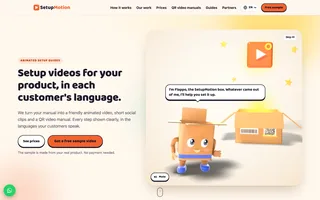
SetupMotion is my own product: it turns a product's manual into an animated set-up film. Its site speaks ten languages.

A building, a piece of land, a product: tell me what people should see before it exists.
This is 2026 so far.
Between March 7 and November 11, 2026: four apps in the App Store, a school system in daily use, a 3D game, a finance site in three languages, a free site in 40 languages, a film product's site in ten languages, three client sites and more than fifty films.
March

- Mawla reaches the App Store (March 10)
May
- Students begin using the homework system
- A tiny-house builder's site (May 5)
July
- Zoomi Kids in the App Store (July 9)
- MUST in the App Store (July 11)
- Landing pages in five languages for a clinic
August
- The school's timetable in use (August 14)
September
- A clinic's pages set up for ads inside ChatGPT (September 18)

October
- A weekly race between classes (October 8)

- Sağlama in English and Arabic (October 14)
- The parcel flight generator (October 31)
November
- Mawla 1.7.0 (November 5)
- A scanner for clinic websites (November 5)
- This site, with its guided flight (November 11)


The engineer
You work with me directly.
The person you talk to is the person who writes the code.
I graduated from the University of California, Santa Cruz in 2018, and I run my own software studio, Stratagem Systems. I build for businesses in the United States and Türkiye, in English and Turkish.
Before any work starts you have a written scope with a price. If what you would show me is confidential, say so in your first message: I sign a confidentiality agreement on request.
I build with TypeScript, Python and Swift; React, Next.js and React Native; PostgreSQL; WebGL and WebGPU for what has to move.
What happens after you write For agencies and product teams LinkedIn
Your turn
Now describe yours.
Yours.
One line is enough. Type it, watch it take shape, and send it to me. I answer within one business day, in English or Turkish. If it looks like a fit, we talk for twenty minutes and I tell you what I would build first.
- An app for my customers
- A system that reads our invoices
- Ads that bring calls to my shop
- A game for my students
From the United States: I can call you between 8 and 9 in the morning Eastern time, 7 and 8 Central.
From the UK and Europe: any time between 08:00 and 14:00 London time.
US mailing address: Kingwood, Texas
Run a school? Ask for a 20-minute demo. A fund manager? See the free first step.